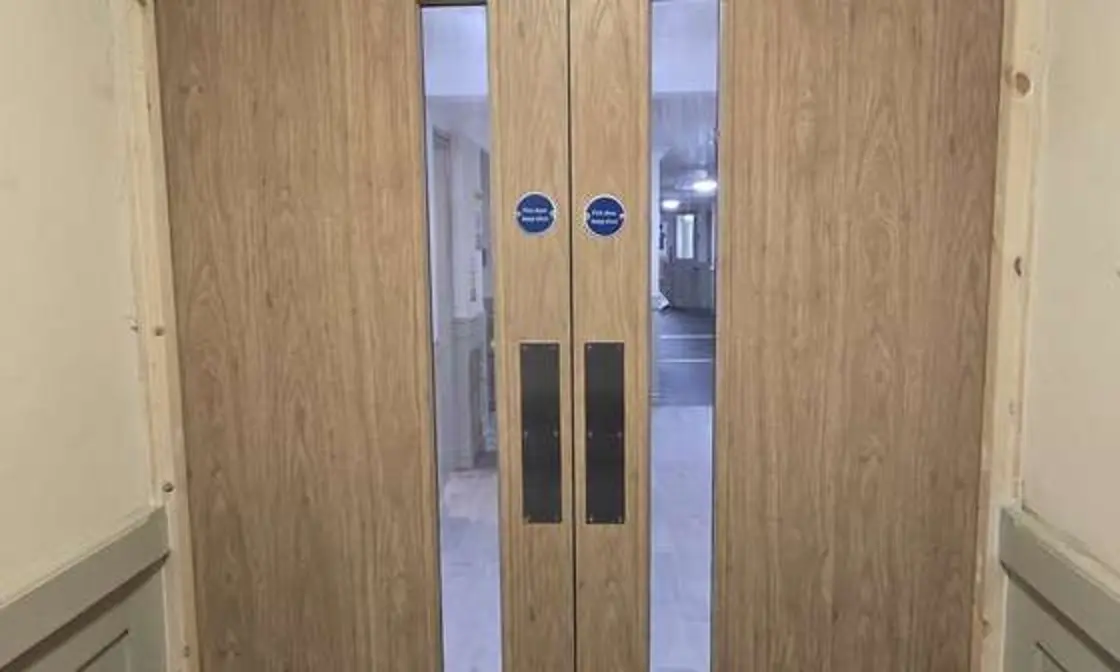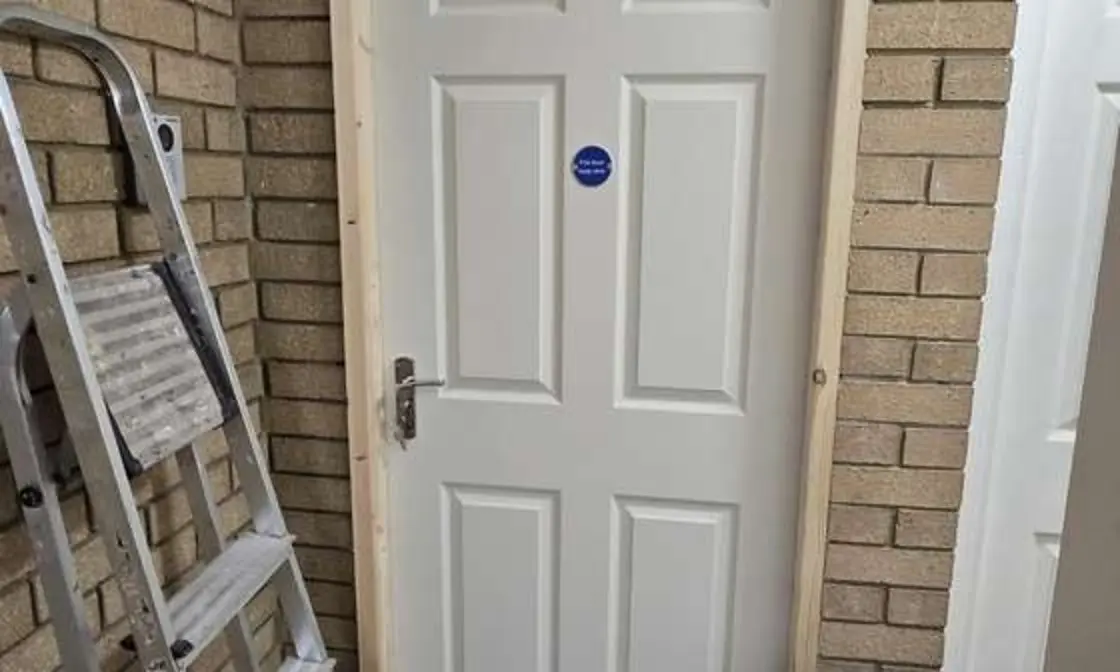
Fire Door Installation in Liverpool
FD30 & FD60 Fire Door Assemblies
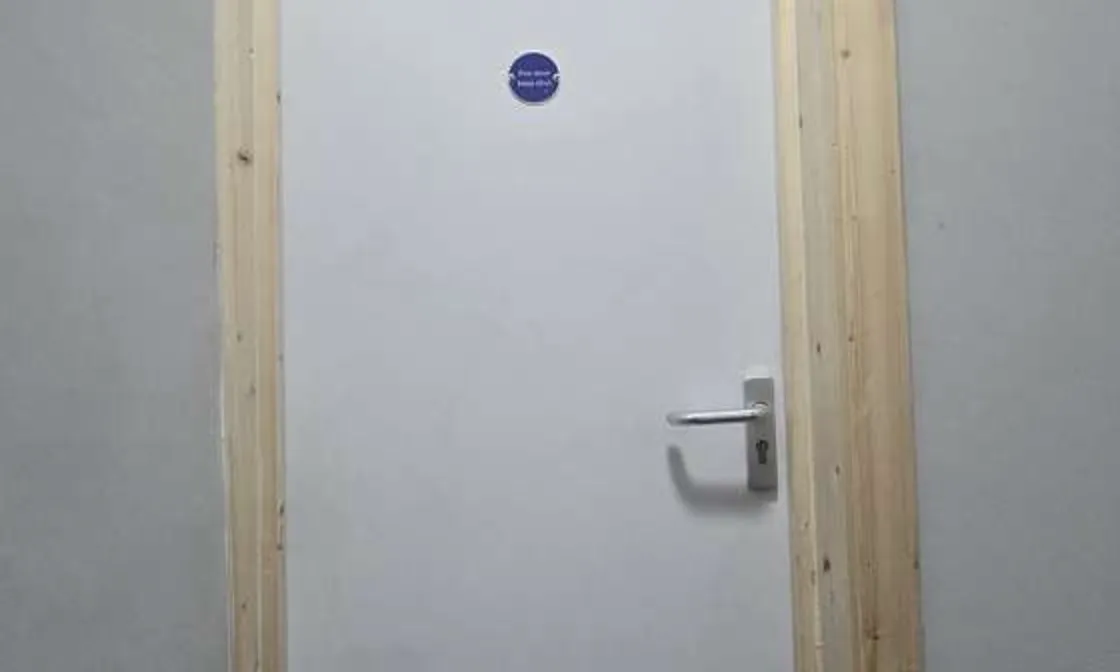
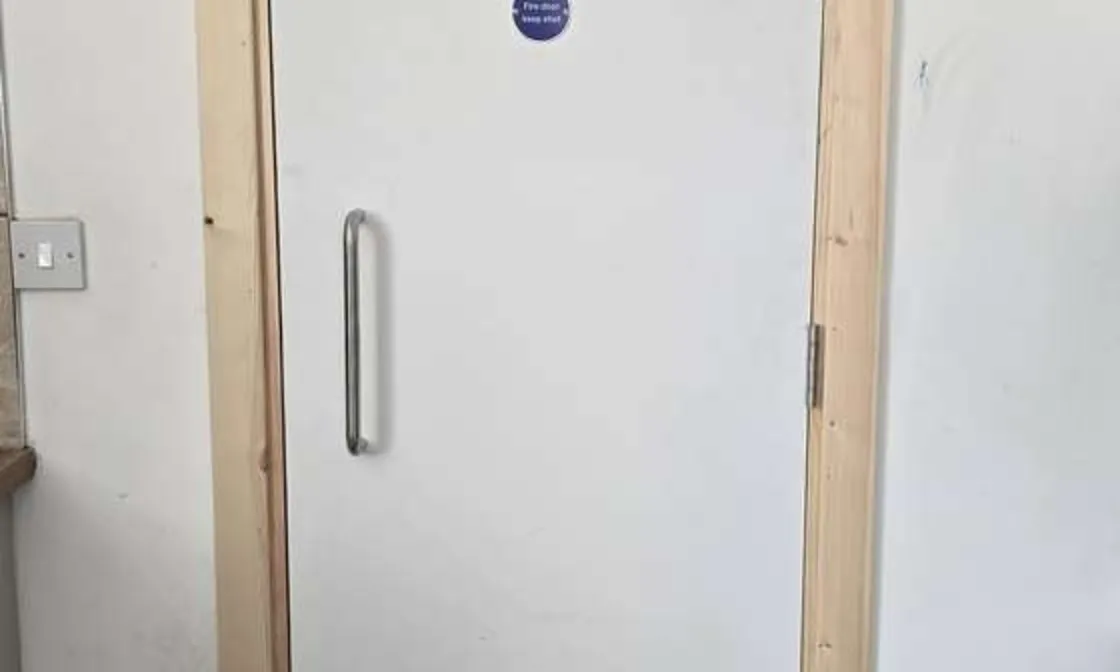
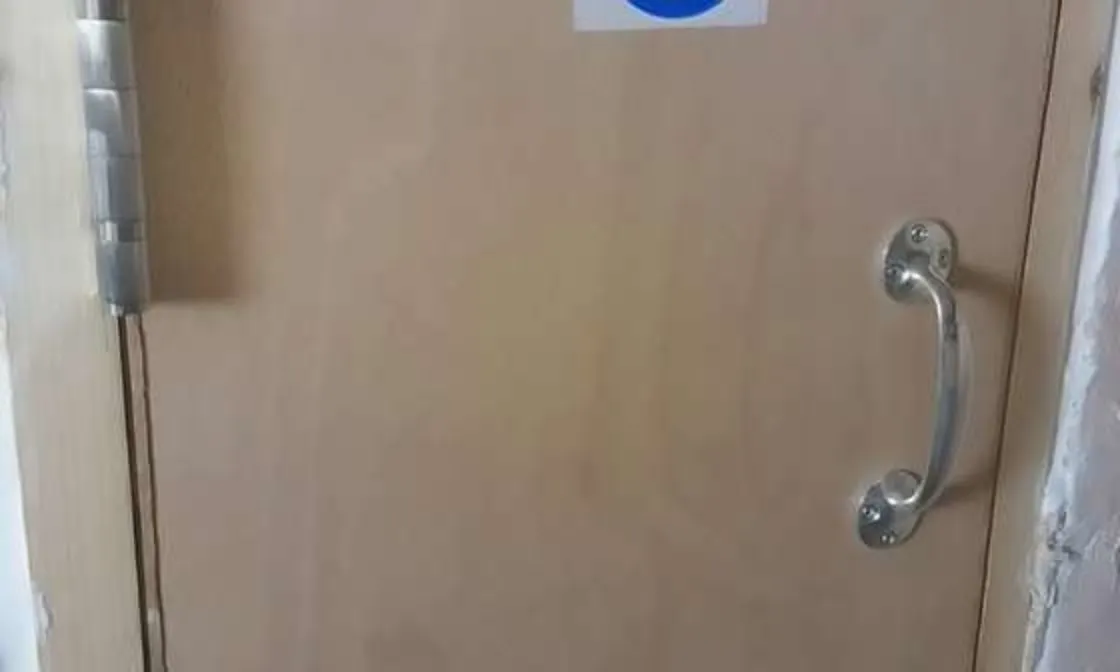
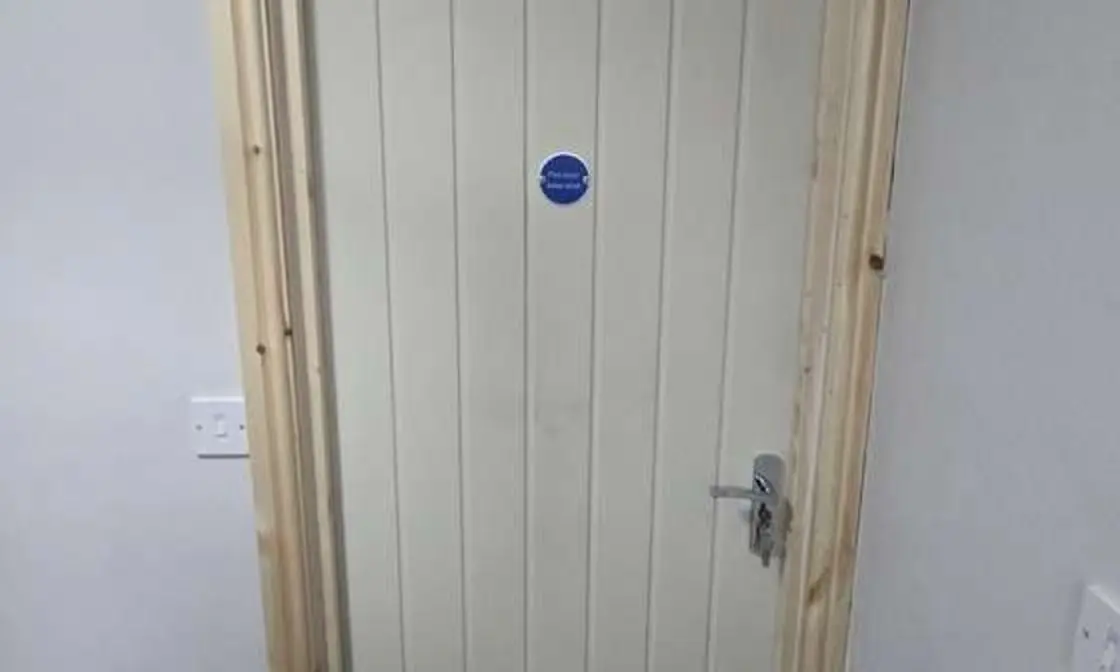
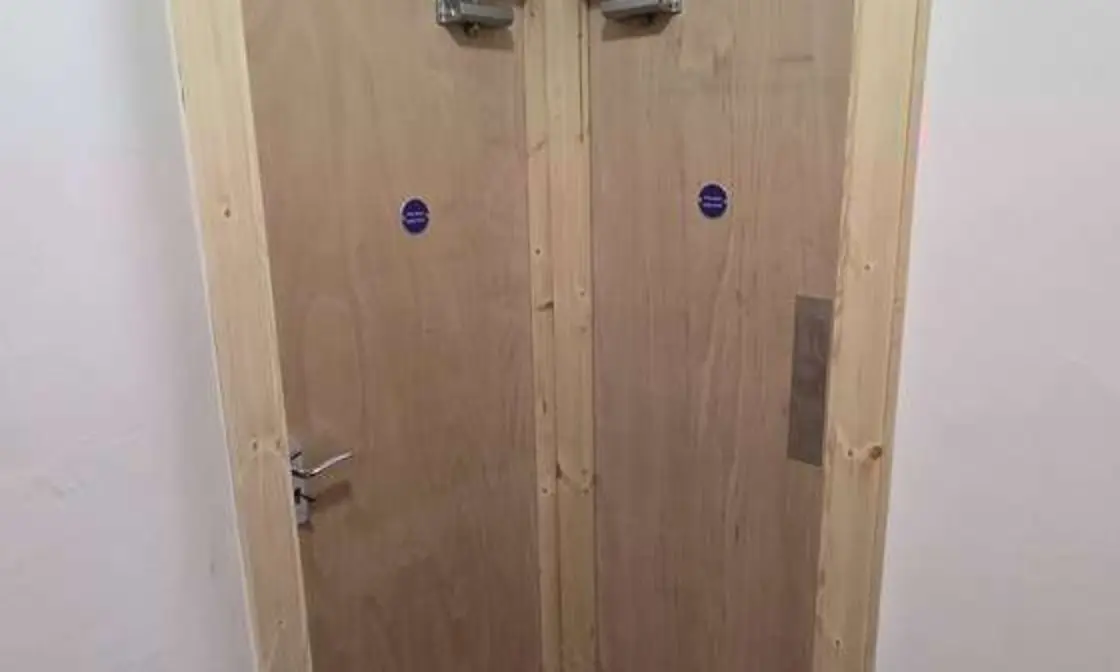
FD30 and FD60 rated fire door assemblies, single and double, supplied by trusted manufacturers and fitted by experienced, certified joiners. Every installation includes correctly positioned intumescent and cold smoke seals, fire-rated hinges (CE marked to BS EN 1935), certified frames, overhead door closers (CE marked to BS EN 1154), and threshold strips where required.
Custom-Made Fire Doors in Liverpool — Any Size
Not every opening is a standard size, especially in older Liverpool buildings, period conversions, and HMOs. We manufacture certified fire doors to bespoke dimensions — oversized, undersized, or awkward openings — using British Woodworking Federation (BWF) certified solid core door blanks with flush ply-faced construction. Every custom door is built and certified to the same fire rating as an off-the-shelf equivalent, so there’s no compromise on safety just because the opening isn’t standard. Working on a period property? See our Victorian and period fire doors.
Fire Door Certificates & Sign-Off
Every fire door assembly we install comes with its own fire door certificate and documented sign-off, giving landlords, property managers, and responsible persons the paperwork they need to demonstrate compliance under the Fire Safety Order. Already have fire doors fitted? We also carry out fire door inspections and ongoing fire door maintenance.
Flat Entrance & Communal Fire Doors
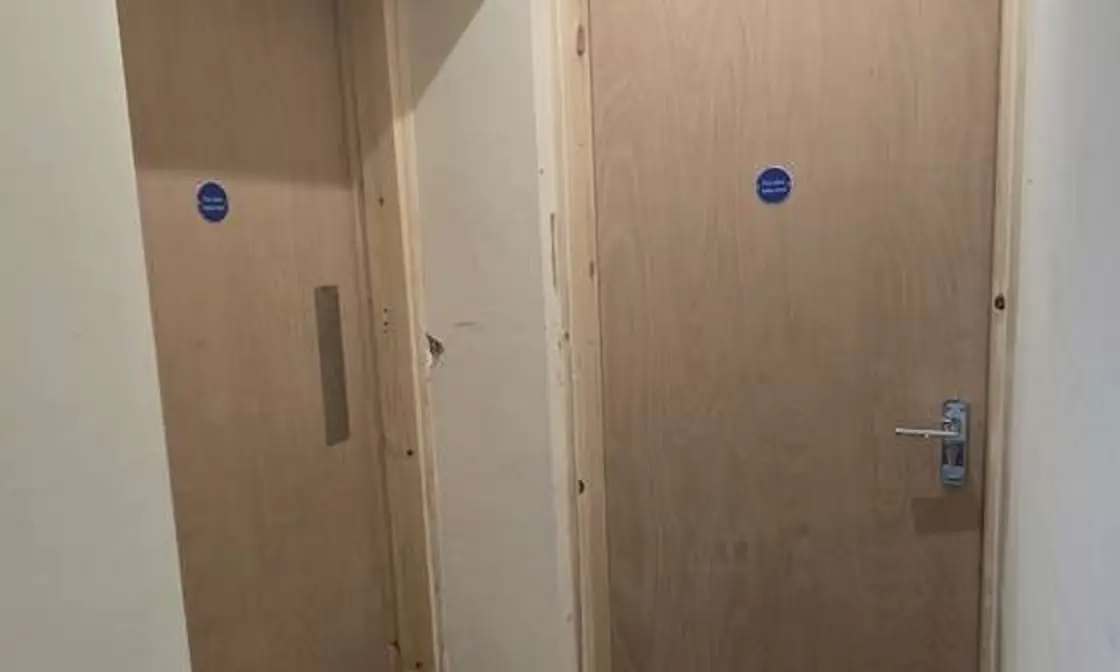
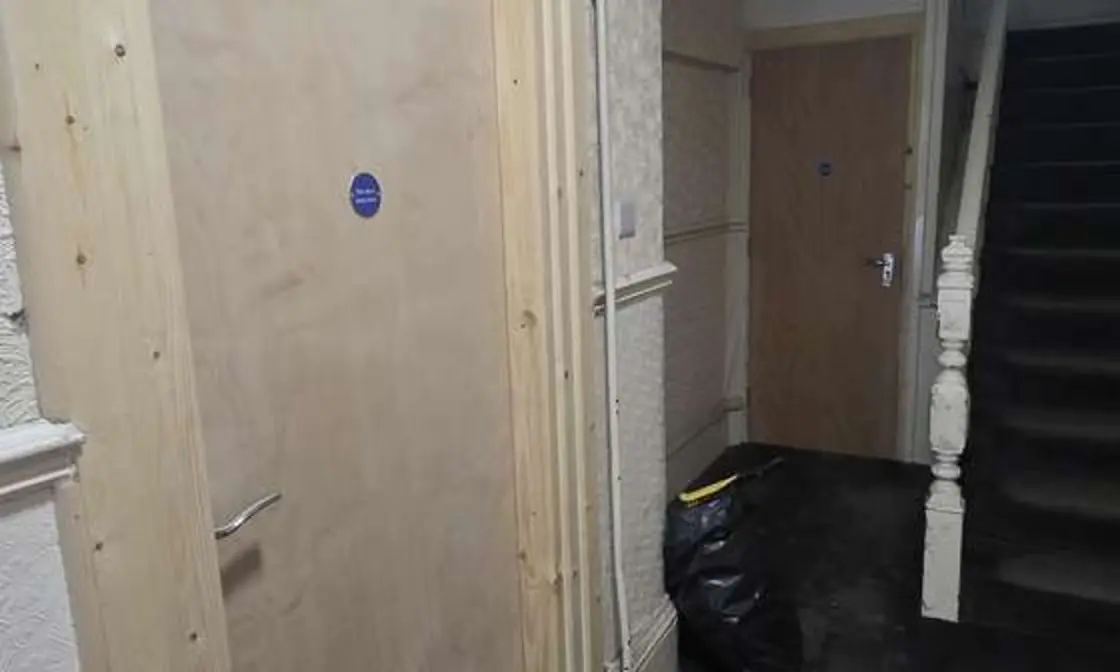
In blocks of flats, the Fire Safety (England) Regulations 2022 require the responsible person in buildings over 11 metres to check communal fire doors every three months and to make best endeavours to check flat entrance doors every year. We supply and fit certified FD30s flat entrance doors and communal fire door assemblies for landlords, managing agents and freeholders across Liverpool, and can take on the ongoing checks through our fire door maintenance service.
BS 8214:2026 — The New Fire Door Standard
In March 2026, BSI published a major revision to BS 8214, the UK’s primary code of practice for fire-resisting and smoke control doors. The 2016 edition — which covered timber doors only — has been withdrawn and replaced. Here’s what’s changed, and what it means for you:
- ✓All door materials, not just timber. BS 8214:2026 now covers timber, steel, aluminium, and composite fire door assemblies, closing a long-standing gap for metal and composite doors.
- ✓The door is treated as one system, not separate parts. Leaf, frame, hinges, seals, glazing, and hardware must all be proven to work together — mixing untested components is now an explicit compliance failure, not just bad practice.
- ✓Evidence-based compliance. Rather than simply following prescriptive rules, the standard now expects documented proof that the specification and installation of a fire door is correct and traceable throughout its life.
- ✓Aligned with current law. The revision reflects the Building Safety Act 2022, the Fire Safety Act 2021, and UKCA marking requirements.
At Liverpool Joinery Services, we’ve built our installation process around this standard: every fire door we fit is treated as a complete assembly, and every job comes with the documentation to prove it. For the full breakdown, read BS 8214:2026 explained.
Nominal, Notional, or Certified — Know What You’ve Got
Not every door labelled “fire door” carries the same weight of evidence, and it matters:
- ✓Nominal fire door — a timber-based door judged by an inspector’s opinion to offer fire resistance for a period of time, but with no test evidence behind it.
- ✓Notional fire door — a door that met the fire door standards in force at the time the building was constructed. These are often older doors, may be missing intumescent strips or smoke seals, and haven’t been tested to today’s standards.
- ✓Certified fire door — a fire door assembly tested as one complete unit and proven, on paper, to deliver its stated fire rating (FD30, FD60, etc.).
Here’s the key point: a nominal or notional door can never be retrospectively certified — a fire rating is proven by physically testing that fire door assembly design, and you can’t run that test on a door already hanging in a building. If you’re relying on a nominal or notional door, the only honest routes forward are a proper assessment or a full replacement with a certified fire door assembly. Every door we install is certified from the outset, so there’s no ambiguity and no gap in the evidence when it’s checked. Read more in our guide to nominal vs notional fire doors.
Fire Door Fitters Covering Merseyside
We fit fire doors across Liverpool and the rest of Merseyside, including Knowsley, Sefton, St Helens and the Wirral. Most of our work is for landlords, managing agents and Responsible Persons in:
- ✓HMOs and shared houses
- ✓Blocks of flats: flat entrance and communal doors
- ✓Commercial premises and hotels
- ✓Period conversions (see our Victorian and period fire doors)
Every job gets the same certified fire door assembly and the same sign-off paperwork, whether it’s one door or a full building. Letting an HMO? Our guide to HMO fire door compliance in Liverpool covers the law, inspection checks and fines.
Professional Standards
- ✓UK Fire Door trained and FireQual-certified in fire door installation & inspection
- ✓BWF-certified door blanks for all custom manufacture
- ✓Experienced joiners with a track record across Liverpool’s commercial and HMO sector
- ✓All our recent installations on Instagram
Experienced Joiners
Whatever the job — a single replacement fire door, a full building strip-out and refit, or a custom door for an odd-sized opening — our joiners bring the same standard of workmanship and the same paperwork trail, every time.
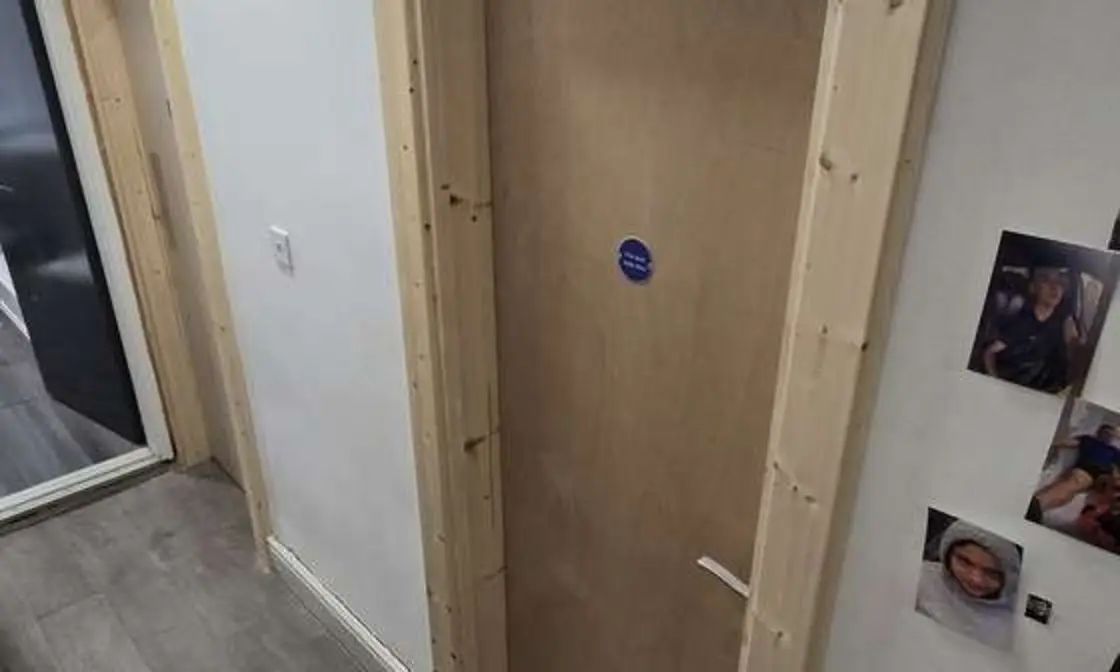
We also make and fit made-to-measure FD30 meter cupboard doors for electrical cupboards in communal hallways, stairwells and HMOs.
Call us today for a free quote.
Questions about fire door ratings, inspections or your legal duties? Read our fire door FAQs.